Most organisations are already running AI. Few have defined who owns the boundary, the decisions, and the outcomes. That's what a CAgO does.
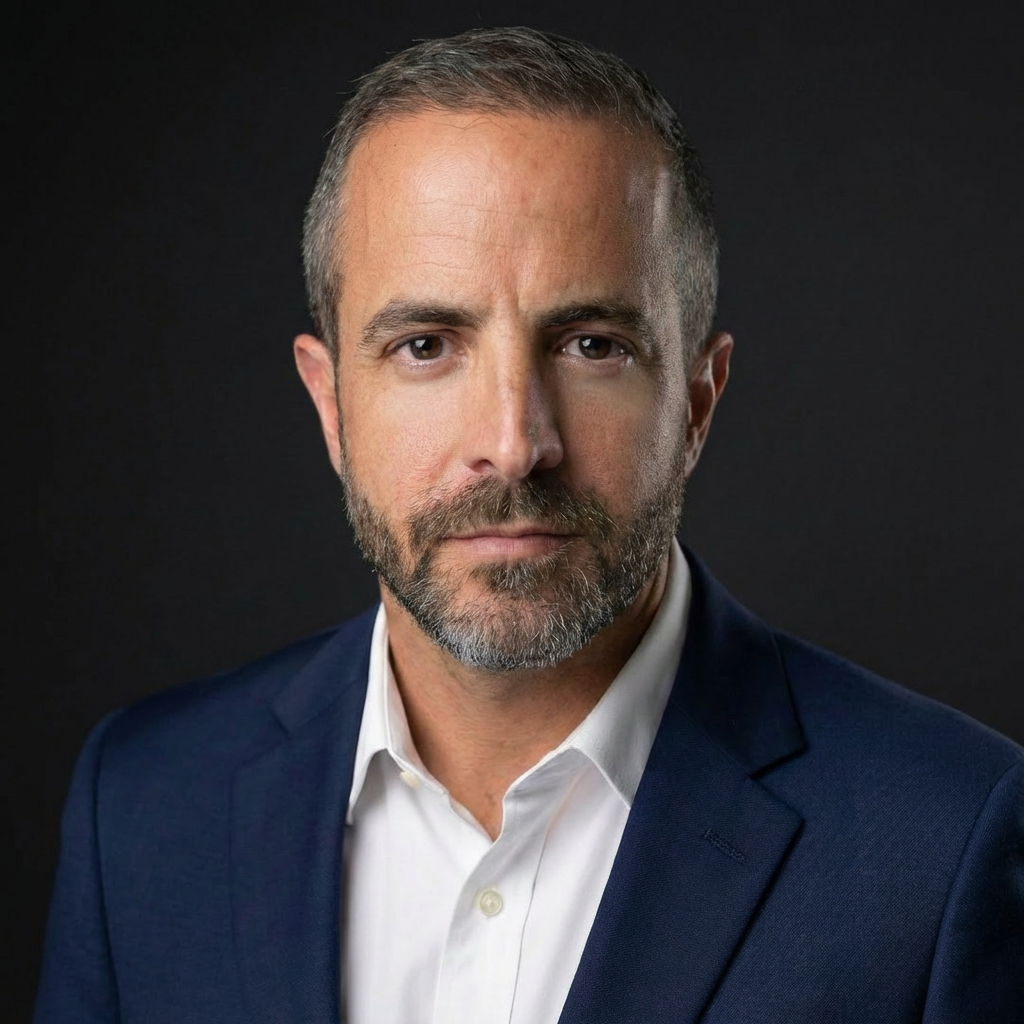
I'm a technology executive who has spent three decades running large-scale platforms — as CTO and CIO, building and governing the systems that now underpin agentic AI in production.
The CAgO title isn't a rebrand. It's the function I've been doing in practice — now named, structured, and written down so others can apply it too.
Most businesses today still run on people: manual steps, manual checks, manual handoffs — capable, but slow, costly, and inconsistent.
The Chief Agentic Officer is the executive who changes that: bringing AI agent orchestration into your operations safely, with one accountable owner for what it's allowed to do, when it escalates to a human, and what it's actually delivering.
Not a rebadged CTO. Not a chatbot strategy. A distinct executive function, built from 30 years running production technology at the frontier.
Your team is still doing the same manual process every day — and it's capping how much you can get done.
You know AI could help your business, but you don't know what to actually do with it, or where to start.
Your board or your gut is asking "are we behind on this?" and you don't have a confident answer yet.
Most businesses still run on human labour and human behaviour to move work forward — capable, but inconsistent, slow to scale, and light on a usable trail of what actually happened. Agentic orchestration replaces that dependency with a governed flow: more output capacity, tighter cost control, and a process you can actually stand behind.
Every agent action sits inside defined permissions and stop conditions — control by design, not policy on paper.
A complete, timestamped trail of what every agent did and why — ready for internal review or external audit, on demand.
Regulatory and risk obligations are enforced in the architecture, not retrofitted after a finding.
Leadership gets a defensible, end-to-end view of process quality — the standard the board can put its name to.
This is one ordinary operating process most businesses run every day — a customer order that needs checking, approving, and processing. Walk both columns and the difference isn't subtle.
Decide what agentic AI should actually do for the business — and where human judgement stays non-negotiable.
Build the permissions, stop conditions, and audit trail that make autonomous systems controllable — before they ship, not after an incident.
Report value, exceptions, and risk to the board in plain language — so leadership always knows what the agents are doing and why.
The role only earns its keep when it changes what gets approved, how fast, and what you can prove afterwards. Five steps, in order.
Clarify what's allowed to run on its own, what must escalate, and who owns the answer.
Find the manual steps, the workarounds, and the ownership gaps already costing you time and money.
Define exactly what the system can approve, stop, escalate, or spend — before it runs, not after.
Put the orchestration in place, governed end-to-end, running on your terms from day one.
Keep the evidence trail that lets you defend the numbers — then extend the same model to the next process.
Most agentic deployments fail not because the technology doesn't work — but because nobody owns the boundary between what the system decides and what a human must. These two phases fix that.
A structured audit of how your organisation actually operates: where decisions are made, where handoffs break, and where agentic automation would compound value without compounding risk. The output is a governance map — a clear view of what to automate, what to keep human, and why.
Standing up the agents, the guardrails, and the audit trail — built against what the governance map actually calls for. Every boundary defined before the first agent runs. Every exception escalation path documented. One accountable owner from start to handover.
The executive function that sits between AI capability and board accountability — why it exists, what it owns, and why the CTO role doesn't cover it.
Read →Most organisations deploying agents haven't answered this question. The boundary between autonomous action and human approval is where governance either holds or fails.
Read →The organisations that get this wrong treat agentic AI as an IT project. The ones that get it right treat it as a change to how accountability works.
Read →Cesar was instrumental in executing the rebuild of our platform for global scalability. By far the best I've worked with — incredibly talented, a respected leader, and goes above and beyond. I would highly recommend Cesar for any senior position.
Mark Deacon · 3x Founder · AFR Fast 100 · 40Under40
Whether you're thinking through agentic governance for the first time or already running agents without a clear ownership model — I'm always interested in the conversation.